
Multimodal acquisition
Targeting PPG, IMU, EDA, and sound across the wearable programme. Sensor combinations will be defined for each ring or wristband configuration, with collection requirements agreed around the study.
Make raw-signal research more accessible.
We’re developing accessible research wearables that connect raw physiological signals with custom AI. SakshiSense, our ring and wristband programme, is the current focus: an instrument for labs investigating stress, attention, and individual patterns of wellbeing.
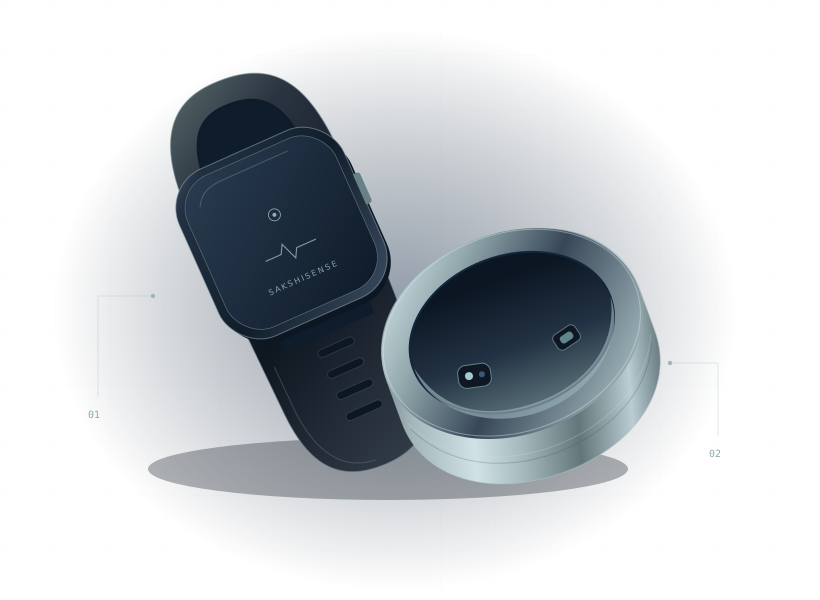
Useful hardware needs more than a sensor. It needs a clear acquisition workflow, reliable context, and an honest account of what a signal can support. We are bringing sensing, embedded systems, and human-centred design together so research teams can develop and evaluate their own models.
See the SakshiSense signal scope ↗Questions guiding this vertical and its contribution to intelligence for inner wellbeing.
Targeting PPG, IMU, EDA, and sound across the wearable programme. Sensor combinations will be defined for each ring or wristband configuration, with collection requirements agreed around the study.
Designing around raw streaming, session context, and export needs. Our aim is to reduce the distance between a research question and a dataset that can be analysed in the researcher’s own tools.
Treating wearability and participant agency as design requirements. Acoustic collection needs explicit consent; feedback should be understandable and should respect the experience it observes.
Agree signals, participant context, sampling needs, and a protocol.
Develop the sensing configuration and collection workflow.
Evaluate artefacts, signal quality, and practical limitations.
Refine the hardware and interface from study findings.
Selected work by our scientific lead and collaborators. Each paper is credited to its authors; publication status is shown alongside the source.
A framework for examining how AI shapes meaning and experience. It extends ethical analysis from observable behaviour to the representations through which people understand and act in the world.
Design implication: assess how feedback frames experience and affects agency, as well as whether a model’s output is accurate.
Read author manuscriptThese works inform the research agenda. They do not constitute validation of SakshiSense hardware or wellness outcomes.
Stress/anxiety and attention/distraction are our first application areas. Researchers can pair physiological observations with task events and self-reports to investigate personalised patterns. The hardware programme is in development; final specifications and availability are discussed directly.
Explore the wellness platform ↗Tell us which signals you need, how you work with data, and what you want to investigate.